Fortgeschrittene Techniken für QAOA
Geschätzte Nutzungsdauer: 3 Minuten auf einem Heron r2 Prozessor (HINWEIS: Das ist nur eine Schätzung. Deine tatsächliche Laufzeit kann abweichen.)
Hintergrund
Dieses Notebook stellt fortgeschrittene Techniken vor, um die Leistung vom Quantum Approximate Optimization Algorithm (QAOA) bei einer großen Anzahl von Qubits zu verbessern. Das Tutorial zum Lösen von Quantenoptimierungsproblemen im Utility-Maßstab gibt dir eine Einführung in QAOA.
Die fortgeschrittenen Techniken in diesem Notebook umfassen:
- SWAP-Strategie mit SAT-Initialmapping: Das ist ein speziell für QAOA entwickelter Transpiler-Pass, der eine SWAP-Strategie und einen SAT-Solver kombiniert, um die Auswahl der physikalischen Qubits auf dem QPU zu verbessern. Die SWAP-Strategie nutzt die Kommutativität der QAOA-Operatoren, um Gates umzuordnen, sodass Schichten von SWAP-Gates gleichzeitig ausgeführt werden können — das reduziert die Tiefe des Schaltkreises [1]. Der SAT-Solver wird verwendet, um ein Initialmapping zu finden, das die Anzahl der benötigten SWAP-Operationen minimiert, um die Qubits im Schaltkreis auf die physikalischen Qubits des Geräts abzubilden [2].
- CVaR-Kostenfunktion: Normalerweise wird der Erwartungswert des Kosten-Hamiltonians als Kostenfunktion für QAOA verwendet, aber wie in [3] gezeigt wurde, kann das Fokussieren auf das Ende der Verteilung anstatt auf den Erwartungswert die Leistung von QAOA für kombinatorische Optimierungsprobleme verbessern. Der CVaR erreicht das. Für eine gegebene Menge von Shots mit entsprechenden Zielwerten des betrachteten Optimierungsproblems ist der Conditional Value at Risk (CVaR) mit Konfidenzniveau als Durchschnitt der besten Shots definiert [3]. Dabei entspricht dem Standard-Erwartungswert, entspricht dem Minimum der gegebenen Shots, und ist ein Kompromiss zwischen dem Fokus auf bessere Shots und einem gewissen Mittelungseffekt, der die Optimierungslandschaft glättet. Außerdem kann der CVaR als Fehlermittelungstechnik eingesetzt werden, um die Qualität der Schätzung des Zielwerts zu verbessern [4].
Voraussetzungen
Bevor du mit diesem Tutorial anfängst, stell sicher, dass du Folgendes installiert hast:
- Qiskit SDK v2.0 oder höher, mit Visualisierungs-Unterstützung
- Qiskit Runtime v0.43 oder höher (
pip install qiskit-ibm-runtime) - Rustworkx Graph-Bibliothek (
pip install rustworkx) - Python SAT (
pip install python-sat)
Setup
# Added by doQumentation — required packages for this notebook
!pip install -q matplotlib numpy python-sat qiskit qiskit-ibm-runtime rustworkx scipy
from __future__ import annotations

import numpy as np
import rustworkx as rx
from dataclasses import dataclass
from itertools import combinations
from threading import Timer
from collections.abc import Callable, Iterable
from pysat.formula import CNF, IDPool
from pysat.solvers import Solver
from scipy.optimize import minimize
from rustworkx.visualization import mpl_draw as draw_graph

from qiskit.quantum_info import SparsePauliOp
from qiskit.circuit.library import QAOAAnsatz
from qiskit.circuit import QuantumCircuit, ParameterVector
from qiskit.transpiler import CouplingMap, PassManager
from qiskit.transpiler.preset_passmanagers import generate_preset_pass_manager
from qiskit.transpiler.passes.routing.commuting_2q_gate_routing import (
    SwapStrategy,
    FindCommutingPauliEvolutions,
    Commuting2qGateRouter,
)

from qiskit_ibm_runtime import QiskitRuntimeService, Session
from qiskit_ibm_runtime import SamplerV2 as Sampler
Max-Cut-Problem
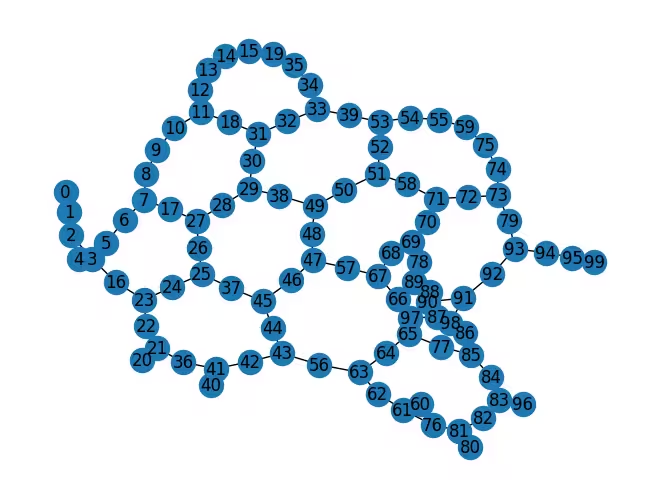
Schauen ma uns an, wie man das Max-Cut-Problem auf einem Graphen mit 100 Knoten mit QAOA löst. Das Max-Cut-Problem ist ein kombinatorisches Optimierungsproblem, das auf einem Graphen definiert ist, wobei die Menge der Knoten und die Menge der Kanten ist. Das Ziel ist, die Knoten in zwei Mengen aufzuteilen, und , sodass die Anzahl der Kanten zwischen den beiden Mengen maximiert wird. In diesem Beispiel verwenden wir einen Graphen mit 100 Knoten, der auf einer Hardware-Kopplungskarte basiert.
Schritt 1: Klassische Eingaben auf ein Quantenproblem abbilden
Graph → Hamiltonian
Zuerst bilden wir das Problem auf einen Quantenschaltkreis ab, der für QAOA geeignet ist. Details zu diesem Prozess findest du im einführenden QAOA-Tutorial.
# Instantiate runtime to access backend
service = QiskitRuntimeService()
backend = service.least_busy(
    min_num_qubits=100, operational=True, simulator=False
)
print(backend)
<IBMBackend('ibm_fez')>
backend.coupling_map.is_symmetric
True
n = 100
graph_100 = rx.PyGraph()
graph_100.add_nodes_from((np.arange(0, n, 1)))
w = 1.0
elist = []

for edge in backend.coupling_map:
    if (edge[0] < n) and (edge[1] < n):
        if (edge[1], edge[0], w) not in elist:
            elist.append((edge[0], edge[1], w))

graph_100.add_edges_from(elist)
draw_graph(graph_100, with_labels=True)
# Construct cost hamiltonian

def build_max_cut_paulis(graph: rx.PyGraph) -> list[tuple[str, float]]:
    """Convert the graph to Pauli list.

    This function does the inverse of `build_max_cut_graph`
    """
    pauli_list = []
    for edge in list(graph.edge_list()):
        paulis = ["I"] * len(graph)
        paulis[edge[0]], paulis[edge[1]] = "Z", "Z"

        weight = graph.get_edge_data(edge[0], edge[1])

        pauli_list.append(("".join(paulis)[::-1], weight))

    return pauli_list

max_cut_paulis = build_max_cut_paulis(graph_100)

cost_hamiltonian = SparsePauliOp.from_list(max_cut_paulis)
print("Cost Function Hamiltonian:", cost_hamiltonian)
Cost Function Hamiltonian: SparsePauliOp(['IIIIIIIIIIIIIIIIIIIIIIIIIIIIIIIIIIIIIIIIIIIIIIIIIIIIIIIIIIIIIIIIIIIIIIIIIIIIIIIIIIIIIIIIIIIIIIIIIIZZ', 'IIIIIIIIIIIIIIIIIIIIIIIIIIIIIIIIIIIIIIIIIIIIIIIIIIIIIIIIIIIIIIIIIIIIIIIIIIIIIIIIIIIIIIIIIIIIIIIIIZZI', 'IIIIIIIIIIIIIIIIIIIIIIIIIIIIIIIIIIIIIIIIIIIIIIIIIIIIIIIIIIIIIIIIIIIIIIIIIIIIIIIIIIIIIIIIIIIIIIIIZZII', 'IIIIIIIIIIIIIIIIIIIIIIIIIIIIIIIIIIIIIIIIIIIIIIIIIIIIIIIIIIIIIIIIIIIIIIIIIIIIIIIIIIIIIIIIIIIIIIIZZIII', 'IIIIIIIIIIIIIIIIIIIIIIIIIIIIIIIIIIIIIIIIIIIIIIIIIIIIIIIIIIIIIIIIIIIIIIIIIIIIIIIIIIIZIIIIIIIIIIIIZIII', 'IIIIIIIIIIIIIIIIIIIIIIIIIIIIIIIIIIIIIIIIIIIIIIIIIIIIIIIIIIIIIIIIIIIIIIIIIIIIIIIIIIIIIIIIIIIIIIZZIIII', 'IIIIIIIIIIIIIIIIIIIIIIIIIIIIIIIIIIIIIIIIIIIIIIIIIIIIIIIIIIIIIIIIIIIIIIIIIIIIIIIIIIIIIIIIIIIIIZZIIIII', 'IIIIIIIIIIIIIIIIIIIIIIIIIIIIIIIIIIIIIIIIIIIIIIIIIIIIIIIIIIIIIIIIIIIIIIIIIIIIIIIIIIIIIIIIIIIIZZIIIIII', 'IIIIIIIIIIIIIIIIIIIIIIIIIIIIIIIIIIIIIIIIIIIIIIIIIIIIIIIIIIIIIIIIIIIIIIIIIIIIIIIIIIIIIIIIIIIZZIIIIIII', 'IIIIIIIIIIIIIIIIIIIIIIIIIIIIIIIIIIIIIIIIIIIIIIIIIIIIIIIIIIIIIIIIIIIIIIIIIIIIIIIIIIZIIIIIIIIIZIIIIIII', 'IIIIIIIIIIIIIIIIIIIIIIIIIIIIIIIIIIIIIIIIIIIIIIIIIIIIIIIIIIIIIIIIIIIIIIIIIIIIIIIIIIIIIIIIIIZZIIIIIIII', 'IIIIIIIIIIIIIIIIIIIIIIIIIIIIIIIIIIIIIIIIIIIIIIIIIIIIIIIIIIIIIIIIIIIIIIIIIIIIIIIIIIIIIIIIIZZIIIIIIIII', 'IIIIIIIIIIIIIIIIIIIIIIIIIIIIIIIIIIIIIIIIIIIIIIIIIIIIIIIIIIIIIIIIIIIIIIIIIIIIIIIIIIIIIIIIZZIIIIIIIIII', 'IIIIIIIIIIIIIIIIIIIIIIIIIIIIIIIIIIIIIIIIIIIIIIIIIIIIIIIIIIIIIIIIIIIIIIIIIIIIIIIIIIIIIIIZZIIIIIIIIIII', 'IIIIIIIIIIIIIIIIIIIIIIIIIIIIIIIIIIIIIIIIIIIIIIIIIIIIIIIIIIIIIIIIIIIIIIIIIIIIIIIIIZIIIIIIZIIIIIIIIIII', 'IIIIIIIIIIIIIIIIIIIIIIIIIIIIIIIIIIIIIIIIIIIIIIIIIIIIIIIIIIIIIIIIIIIIIIIIIIIIIIIIIIIIIIZZIIIIIIIIIIII', 'IIIIIIIIIIIIIIIIIIIIIIIIIIIIIIIIIIIIIIIIIIIIIIIIIIIIIIIIIIIIIIIIIIIIIIIIIIIIIIIIIIIIIZZIIIIIIIIIIIII', 'IIIIIIIIIIIIIIIIIIIIIIIIIIIIIIIIIIIIIIIIIIIIIIIIIIIIIIIIIIIIIIIIIIIIIIIIIIIIIIIIIIIIZZIIIIIIIIIIIIII', 'IIIIIIIIIIIIIIIIIIIIIIIIIIIIIIIIIIIIIIIIIIIIIIIIIIIIIIIIIIIIIIIIIIIIIIIIIIIIIIIIZIIIZIIIIIIIIIIIIIII', 'IIIIIIIIIIIIIIIIIIIIIIIIIIIIIIIIIIIIIIIIIIIIIIIIIIIIIIIIIIIIIIIIIIIIIIIIIIIIZIIIIIIZIIIIIIIIIIIIIIII', 'IIIIIIIIIIIIIIIIIIIIIIIIIIIIIIIIIIIIIIIIIIIIIIIIIIIIIIIIIIIIIIIIIIIIIIIIZIIIIIIIIIZIIIIIIIIIIIIIIIII', 'IIIIIIIIIIIIIIIIIIIIIIIIIIIIIIIIIIIIIIIIIIIIIIIIIIIIIIIIIIIIIIIIIIIIZIIIIIIIIIIIIZIIIIIIIIIIIIIIIIII', 'IIIIIIIIIIIIIIIIIIIIIIIIIIIIIIIIIIIIIIIIIIIIIIIIIIIIIIIIIIIIIIIIZIIIIIIIIIIIIIIIZIIIIIIIIIIIIIIIIIII', 'IIIIIIIIIIIIIIIIIIIIIIIIIIIIIIIIIIIIIIIIIIIIIIIIIIIIIIIIIIIIIIIIIIIIIIIIIIIIIIZZIIIIIIIIIIIIIIIIIIII', 'IIIIIIIIIIIIIIIIIIIIIIIIIIIIIIIIIIIIIIIIIIIIIIIIIIIIIIIIIIIIIIIIIIIIIIIIIIIIIZZIIIIIIIIIIIIIIIIIIIII', 'IIIIIIIIIIIIIIIIIIIIIIIIIIIIIIIIIIIIIIIIIIIIIIIIIIIIIIIIIIIIIIIZIIIIIIIIIIIIIIZIIIIIIIIIIIIIIIIIIIII', 'IIIIIIIIIIIIIIIIIIIIIIIIIIIIIIIIIIIIIIIIIIIIIIIIIIIIIIIIIIIIIIIIIIIIIIIIIIIIZZIIIIIIIIIIIIIIIIIIIIII', 'IIIIIIIIIIIIIIIIIIIIIIIIIIIIIIIIIIIIIIIIIIIIIIIIIIIIIIIIIIIIIIIIIIIIIIIIIIIZZIIIIIIIIIIIIIIIIIIIIIII', 'IIIIIIIIIIIIIIIIIIIIIIIIIIIIIIIIIIIIIIIIIIIIIIIIIIIIIIIIIIIIIIIIIIIIIIIIIIZZIIIIIIIIIIIIIIIIIIIIIIII', 'IIIIIIIIIIIIIIIIIIIIIIIIIIIIIIIIIIIIIIIIIIIIIIIIIIIIIIIIIIIIIIIIIIIIIIIIIZZIIIIIIIIIIIIIIIIIIIIIIIII', 'IIIIIIIIIIIIIIIIIIIIIIIIIIIIIIIIIIIIIIIIIIIIIIIIIIIIIIIIIIIIIIZIIIIIIIIIIIZIIIIIIIIIIIIIIIIIIIIIIIII', 'IIIIIIIIIIIIIIIIIIIIIIIIIIIIIIIIIIIIIIIIIIIIIIIIIIIIIIIIIIIIIIIIIIIIIIIIZZIIIIIIIIIIIIIIIIIIIIIIIIII', 'IIIIIIIIIIIIIIIIIIIIIIIIIIIIIIIIIIIIIIIIIIIIIIIIIIIIIIIIIIIIIIIIIIIIIIIZZIIIIIIIIIIIIIIIIIIIIIIIIIII', 'IIIIIIIIIIIIIIIIIIIIIIIIIIIIIIIIIIIIIIIIIIIIIIIIIIIIIIIIIIIIIIIIIIIIIIZZIIIIIIIIIIIIIIIIIIIIIIIIIIII', 'IIIIIIIIIIIIIIIIIIIIIIIIIIIIIIIIIIIIIIIIIIIIIIIIIIIIIIIIIIIIIIIIIIIIIZZIIIIIIIIIIIIIIIIIIIIIIIIIIIII', 'IIIIIIIIIIIIIIIIIIIIIIIIIIIIIIIIIIIIIIIIIIIIIIIIIIIIIIIIIIIIIZIIIIIIIIZIIIIIIIIIIIIIIIIIIIIIIIIIIIII', 'IIIIIIIIIIIIIIIIIIIIIIIIIIIIIIIIIIIIIIIIIIIIIIIIIIIIIIIIIIIIIIIIIIIIZZIIIIIIIIIIIIIIIIIIIIIIIIIIIIII', 'IIIIIIIIIIIIIIIIIIIIIIIIIIIIIIIIIIIIIIIIIIIIIIIIIIIIIIIIIIIIIIIIIIIZZIIIIIIIIIIIIIIIIIIIIIIIIIIIIIII', 'IIIIIIIIIIIIIIIIIIIIIIIIIIIIIIIIIIIIIIIIIIIIIIIIIIIIIIIIIIIIIIIIIIZZIIIIIIIIIIIIIIIIIIIIIIIIIIIIIIII', 'IIIIIIIIIIIIIIIIIIIIIIIIIIIIIIIIIIIIIIIIIIIIIIIIIIIIIIIIIIIIIIIIIZZIIIIIIIIIIIIIIIIIIIIIIIIIIIIIIIII', 'IIIIIIIIIIIIIIIIIIIIIIIIIIIIIIIIIIIIIIIIIIIIIIIIIIIIIIIIIIIIZIIIIIZIIIIIIIIIIIIIIIIIIIIIIIIIIIIIIIII', 'IIIIIIIIIIIIIIIIIIIIIIIIIIIIIIIIIIIIIIIIIIIIIIIIIIIIIIIIIIIIIIIIZZIIIIIIIIIIIIIIIIIIIIIIIIIIIIIIIIII', 'IIIIIIIIIIIIIIIIIIIIIIIIIIIIIIIIIIIIIIIIIIIIIIIIIIIIIIIIIIZIIIIZIIIIIIIIIIIIIIIIIIIIIIIIIIIIIIIIIIII', 'IIIIIIIIIIIIIIIIIIIIIIIIIIIIIIIIIIIIIIIIIIIIIIIIIIIIIIZIIIIIIIZIIIIIIIIIIIIIIIIIIIIIIIIIIIIIIIIIIIII', 'IIIIIIIIIIIIIIIIIIIIIIIIIIIIIIIIIIIIIIIIIIIIIIIIIIZIIIIIIIIIIZIIIIIIIIIIIIIIIIIIIIIIIIIIIIIIIIIIIIII', 'IIIIIIIIIIIIIIIIIIIIIIIIIIIIIIIIIIIIIIIIIIIIIIZIIIIIIIIIIIIIZIIIIIIIIIIIIIIIIIIIIIIIIIIIIIIIIIIIIIII', 'IIIIIIIIIIIIIIIIIIIIIIIIIIIIIIIIIIIIIIIIIIIIIIIIIIIIIIIIIIZZIIIIIIIIIIIIIIIIIIIIIIIIIIIIIIIIIIIIIIII', 'IIIIIIIIIIIIIIIIIIIIIIIIIIIIIIIIIIIIIIIIIIIIIIIIIIIIIIIIIZZIIIIIIIIIIIIIIIIIIIIIIIIIIIIIIIIIIIIIIIII', 'IIIIIIIIIIIIIIIIIIIIIIIIIIIIIIIIIIIIIIIIIIIIIIIIIIIIIIIIZZIIIIIIIIIIIIIIIIIIIIIIIIIIIIIIIIIIIIIIIIII', 'IIIIIIIIIIIIIIIIIIIIIIIIIIIIIIIIIIIIIIIIIIIIIIIIIIIIIIIZZIIIIIIIIIIIIIIIIIIIIIIIIIIIIIIIIIIIIIIIIIII', 'IIIIIIIIIIIIIIIIIIIIIIIIIIIIIIIIIIIIIIIIIIIZIIIIIIIIIIIIZIIIIIIIIIIIIIIIIIIIIIIIIIIIIIIIIIIIIIIIIIII', 'IIIIIIIIIIIIIIIIIIIIIIIIIIIIIIIIIIIIIIIIIIIIIIIIIIIIIIZZIIIIIIIIIIIIIIIIIIIIIIIIIIIIIIIIIIIIIIIIIIII', 'IIIIIIIIIIIIIIIIIIIIIIIIIIIIIIIIIIIIIIIIIIIIIIIIIIIIIZZIIIIIIIIIIIIIIIIIIIIIIIIIIIIIIIIIIIIIIIIIIIII', 'IIIIIIIIIIIIIIIIIIIIIIIIIIIIIIIIIIIIIIIIIIIIIIIIIIIIZZIIIIIIIIIIIIIIIIIIIIIIIIIIIIIIIIIIIIIIIIIIIIII', 'IIIIIIIIIIIIIIIIIIIIIIIIIIIIIIIIIIIIIIIIIIIIIIIIIIIZZIIIIIIIIIIIIIIIIIIIIIIIIIIIIIIIIIIIIIIIIIIIIIII', 'IIIIIIIIIIIIIIIIIIIIIIIIIIIIIIIIIIIIIIIIIIZIIIIIIIIIZIIIIIIIIIIIIIIIIIIIIIIIIIIIIIIIIIIIIIIIIIIIIIII', 'IIIIIIIIIIIIIIIIIIIIIIIIIIIIIIIIIIIIIIIIIIIIIIIIIIZZIIIIIIIIIIIIIIIIIIIIIIIIIIIIIIIIIIIIIIIIIIIIIIII', 'IIIIIIIIIIIIIIIIIIIIIIIIIIIIIIIIIIIIIIIIIIIIIIIIIZZIIIIIIIIIIIIIIIIIIIIIIIIIIIIIIIIIIIIIIIIIIIIIIIII', 'IIIIIIIIIIIIIIIIIIIIIIIIIIIIIIIIIIIIIIIIIIIIIIIIZZIIIIIIIIIIIIIIIIIIIIIIIIIIIIIIIIIIIIIIIIIIIIIIIIII', 'IIIIIIIIIIIIIIIIIIIIIIIIIIIIIIIIIIIIIIIIIIIIIIIZZIIIIIIIIIIIIIIIIIIIIIIIIIIIIIIIIIIIIIIIIIIIIIIIIIII', 'IIIIIIIIIIIIIIIIIIIIIIIIIIIIIIIIIIIIIIIIIZIIIIIIZIIIIIIIIIIIIIIIIIIIIIIIIIIIIIIIIIIIIIIIIIIIIIIIIIII', 'IIIIIIIIIIIIIIIIIIIIIIIIIIIIIIIIIIIIIIIIIIIIIIZZIIIIIIIIIIIIIIIIIIIIIIIIIIIIIIIIIIIIIIIIIIIIIIIIIIII', 'IIIIIIIIIIIIIIIIIIIIIIIIIIIIIIIIIIIIIIIIIIIIIZZIIIIIIIIIIIIIIIIIIIIIIIIIIIIIIIIIIIIIIIIIIIIIIIIIIIII', 'IIIIIIIIIIIIIIIIIIIIIIIIIIIIIIIIIIIIIIIIIIIIZZIIIIIIIIIIIIIIIIIIIIIIIIIIIIIIIIIIIIIIIIIIIIIIIIIIIIII', 'IIIIIIIIIIIIIIIIIIIIIIIIIIIIIIIIIIIIIIIIZIIIZIIIIIIIIIIIIIIIIIIIIIIIIIIIIIIIIIIIIIIIIIIIIIIIIIIIIIII', 'IIIIIIIIIIIIIIIIIIIIIIIIIIIIIIIIIIIIZIIIIIIZIIIIIIIIIIIIIIIIIIIIIIIIIIIIIIIIIIIIIIIIIIIIIIIIIIIIIIII', 'IIIIIIIIIIIIIIIIIIIIIIIIIIIIIIIIZIIIIIIIIIZIIIIIIIIIIIIIIIIIIIIIIIIIIIIIIIIIIIIIIIIIIIIIIIIIIIIIIIII', 'IIIIIIIIIIIIIIIIIIIIIIIIIIIIZIIIIIIIIIIIIZIIIIIIIIIIIIIIIIIIIIIIIIIIIIIIIIIIIIIIIIIIIIIIIIIIIIIIIIII', 'IIIIIIIIIIIIIIIIIIIIIIIIZIIIIIIIIIIIIIIIZIIIIIIIIIIIIIIIIIIIIIIIIIIIIIIIIIIIIIIIIIIIIIIIIIIIIIIIIIII', 'IIIIIIIIIIIIIIIIIIIIIIIIIIIIIIIIIIIIIIZZIIIIIIIIIIIIIIIIIIIIIIIIIIIIIIIIIIIIIIIIIIIIIIIIIIIIIIIIIIII', 'IIIIIIIIIIIIIIIIIIIIIIIIIIIIIIIIIIIIIZZIIIIIIIIIIIIIIIIIIIIIIIIIIIIIIIIIIIIIIIIIIIIIIIIIIIIIIIIIIIII', 'IIIIIIIIIIIIIIIIIIIIIIIZIIIIIIIIIIIIIIZIIIIIIIIIIIIIIIIIIIIIIIIIIIIIIIIIIIIIIIIIIIIIIIIIIIIIIIIIIIII', 'IIIIIIIIIIIIIIIIIIIIIIIIIIIIIIIIIIIIZZIIIIIIIIIIIIIIIIIIIIIIIIIIIIIIIIIIIIIIIIIIIIIIIIIIIIIIIIIIIIII', 'IIIIIIIIIIIIIIIIIIIIIIIIIIIIIIIIIIIZZIIIIIIIIIIIIIIIIIIIIIIIIIIIIIIIIIIIIIIIIIIIIIIIIIIIIIIIIIIIIIII', 'IIIIIIIIIIIIIIIIIIIIIIIIIIIIIIIIIIZZIIIIIIIIIIIIIIIIIIIIIIIIIIIIIIIIIIIIIIIIIIIIIIIIIIIIIIIIIIIIIIII', 'IIIIIIIIIIIIIIIIIIIIIIIIIIIIIIIIIZZIIIIIIIIIIIIIIIIIIIIIIIIIIIIIIIIIIIIIIIIIIIIIIIIIIIIIIIIIIIIIIIII', 'IIIIIIIIIIIIIIIIIIIIIIZIIIIIIIIIIIZIIIIIIIIIIIIIIIIIIIIIIIIIIIIIIIIIIIIIIIIIIIIIIIIIIIIIIIIIIIIIIIII', 'IIIIIIIIIIIIIIIIIIIIIIIIIIIIIIIIZZIIIIIIIIIIIIIIIIIIIIIIIIIIIIIIIIIIIIIIIIIIIIIIIIIIIIIIIIIIIIIIIIII', 'IIIIIIIIIIIIIIIIIIIIIIIIIIIIIIIZZIIIIIIIIIIIIIIIIIIIIIIIIIIIIIIIIIIIIIIIIIIIIIIIIIIIIIIIIIIIIIIIIIII', 'IIIIIIIIIIIIIIIIIIIIIIIIIIIIIIZZIIIIIIIIIIIIIIIIIIIIIIIIIIIIIIIIIIIIIIIIIIIIIIIIIIIIIIIIIIIIIIIIIIII', 'IIIIIIIIIIIIIIIIIIIIIIIIIIIIIZZIIIIIIIIIIIIIIIIIIIIIIIIIIIIIIIIIIIIIIIIIIIIIIIIIIIIIIIIIIIIIIIIIIIII', 'IIIIIIIIIIIIIIIIIIIIIZIIIIIIIIZIIIIIIIIIIIIIIIIIIIIIIIIIIIIIIIIIIIIIIIIIIIIIIIIIIIIIIIIIIIIIIIIIIIII', 'IIIIIIIIIIIIIIIIIIIIIIIIIIIIZZIIIIIIIIIIIIIIIIIIIIIIIIIIIIIIIIIIIIIIIIIIIIIIIIIIIIIIIIIIIIIIIIIIIIII', 'IIIIIIIIIIIIIIIIIIIIIIIIIIIZZIIIIIIIIIIIIIIIIIIIIIIIIIIIIIIIIIIIIIIIIIIIIIIIIIIIIIIIIIIIIIIIIIIIIIII', 'IIIIIIIIIIIIIIIIIIIIIIIIIIZZIIIIIIIIIIIIIIIIIIIIIIIIIIIIIIIIIIIIIIIIIIIIIIIIIIIIIIIIIIIIIIIIIIIIIIII', 'IIIIIIIIIIIIIIIIIIIIIIIIIZZIIIIIIIIIIIIIIIIIIIIIIIIIIIIIIIIIIIIIIIIIIIIIIIIIIIIIIIIIIIIIIIIIIIIIIIII', 'IIIIIIIIIIIIIIIIIIIIZIIIIIZIIIIIIIIIIIIIIIIIIIIIIIIIIIIIIIIIIIIIIIIIIIIIIIIIIIIIIIIIIIIIIIIIIIIIIIII', 'IIIIIIIIIIIIIIIIIIIIIIIIZZIIIIIIIIIIIIIIIIIIIIIIIIIIIIIIIIIIIIIIIIIIIIIIIIIIIIIIIIIIIIIIIIIIIIIIIIII', 'IIIIIIIIIIIIIIIIIIZIIIIZIIIIIIIIIIIIIIIIIIIIIIIIIIIIIIIIIIIIIIIIIIIIIIIIIIIIIIIIIIIIIIIIIIIIIIIIIIII', 'IIIIIIIIIIIIIIZIIIIIIIZIIIIIIIIIIIIIIIIIIIIIIIIIIIIIIIIIIIIIIIIIIIIIIIIIIIIIIIIIIIIIIIIIIIIIIIIIIIII', 'IIIIIIIIIIZIIIIIIIIIIZIIIIIIIIIIIIIIIIIIIIIIIIIIIIIIIIIIIIIIIIIIIIIIIIIIIIIIIIIIIIIIIIIIIIIIIIIIIIII', 'IIIIIIZIIIIIIIIIIIIIZIIIIIIIIIIIIIIIIIIIIIIIIIIIIIIIIIIIIIIIIIIIIIIIIIIIIIIIIIIIIIIIIIIIIIIIIIIIIIII', 'IIIIIIIIIIIIIIIIIIZZIIIIIIIIIIIIIIIIIIIIIIIIIIIIIIIIIIIIIIIIIIIIIIIIIIIIIIIIIIIIIIIIIIIIIIIIIIIIIIII', 'IIIIIIIIIIIIIIIIIZZIIIIIIIIIIIIIIIIIIIIIIIIIIIIIIIIIIIIIIIIIIIIIIIIIIIIIIIIIIIIIIIIIIIIIIIIIIIIIIIII', 'IIIIIIIIIIIIIIIIZZIIIIIIIIIIIIIIIIIIIIIIIIIIIIIIIIIIIIIIIIIIIIIIIIIIIIIIIIIIIIIIIIIIIIIIIIIIIIIIIIII', 'IIIIIIIIIIIIIIIZZIIIIIIIIIIIIIIIIIIIIIIIIIIIIIIIIIIIIIIIIIIIIIIIIIIIIIIIIIIIIIIIIIIIIIIIIIIIIIIIIIII', 'IIIZIIIIIIIIIIIIZIIIIIIIIIIIIIIIIIIIIIIIIIIIIIIIIIIIIIIIIIIIIIIIIIIIIIIIIIIIIIIIIIIIIIIIIIIIIIIIIIII', 'IIIIIIIIIIIIIIZZIIIIIIIIIIIIIIIIIIIIIIIIIIIIIIIIIIIIIIIIIIIIIIIIIIIIIIIIIIIIIIIIIIIIIIIIIIIIIIIIIIII', 'IIIIIIIIIIIIIZZIIIIIIIIIIIIIIIIIIIIIIIIIIIIIIIIIIIIIIIIIIIIIIIIIIIIIIIIIIIIIIIIIIIIIIIIIIIIIIIIIIIII', 'IIIIIIIIIIIIZZIIIIIIIIIIIIIIIIIIIIIIIIIIIIIIIIIIIIIIIIIIIIIIIIIIIIIIIIIIIIIIIIIIIIIIIIIIIIIIIIIIIIII', 'IIIIIIIIIIIZZIIIIIIIIIIIIIIIIIIIIIIIIIIIIIIIIIIIIIIIIIIIIIIIIIIIIIIIIIIIIIIIIIIIIIIIIIIIIIIIIIIIIIII', 'IIZIIIIIIIIIZIIIIIIIIIIIIIIIIIIIIIIIIIIIIIIIIIIIIIIIIIIIIIIIIIIIIIIIIIIIIIIIIIIIIIIIIIIIIIIIIIIIIIII', 'IIIIIIIIIIZZIIIIIIIIIIIIIIIIIIIIIIIIIIIIIIIIIIIIIIIIIIIIIIIIIIIIIIIIIIIIIIIIIIIIIIIIIIIIIIIIIIIIIIII', 'IIIIIIIIIZZIIIIIIIIIIIIIIIIIIIIIIIIIIIIIIIIIIIIIIIIIIIIIIIIIIIIIIIIIIIIIIIIIIIIIIIIIIIIIIIIIIIIIIIII', 'IIIIIIIIZZIIIIIIIIIIIIIIIIIIIIIIIIIIIIIIIIIIIIIIIIIIIIIIIIIIIIIIIIIIIIIIIIIIIIIIIIIIIIIIIIIIIIIIIIII', 'IIIIIIIZZIIIIIIIIIIIIIIIIIIIIIIIIIIIIIIIIIIIIIIIIIIIIIIIIIIIIIIIIIIIIIIIIIIIIIIIIIIIIIIIIIIIIIIIIIII', 'IZIIIIIIZIIIIIIIIIIIIIIIIIIIIIIIIIIIIIIIIIIIIIIIIIIIIIIIIIIIIIIIIIIIIIIIIIIIIIIIIIIIIIIIIIIIIIIIIIII', 'IIIIIIZZIIIIIIIIIIIIIIIIIIIIIIIIIIIIIIIIIIIIIIIIIIIIIIIIIIIIIIIIIIIIIIIIIIIIIIIIIIIIIIIIIIIIIIIIIIII', 'IIIIIZZIIIIIIIIIIIIIIIIIIIIIIIIIIIIIIIIIIIIIIIIIIIIIIIIIIIIIIIIIIIIIIIIIIIIIIIIIIIIIIIIIIIIIIIIIIIII', 'IIIIZZIIIIIIIIIIIIIIIIIIIIIIIIIIIIIIIIIIIIIIIIIIIIIIIIIIIIIIIIIIIIIIIIIIIIIIIIIIIIIIIIIIIIIIIIIIIIII', 'ZIIIZIIIIIIIIIIIIIIIIIIIIIIIIIIIIIIIIIIIIIIIIIIIIIIIIIIIIIIIIIIIIIIIIIIIIIIIIIIIIIIIIIIIIIIIIIIIIIII'],
              coeffs=[1.+0.j, 1.+0.j, 1.+0.j, 1.+0.j, 1.+0.j, 1.+0.j, 1.+0.j, 1.+0.j, 1.+0.j,
 1.+0.j, 1.+0.j, 1.+0.j, 1.+0.j, 1.+0.j, 1.+0.j, 1.+0.j, 1.+0.j, 1.+0.j,
 1.+0.j, 1.+0.j, 1.+0.j, 1.+0.j, 1.+0.j, 1.+0.j, 1.+0.j, 1.+0.j, 1.+0.j,
 1.+0.j, 1.+0.j, 1.+0.j, 1.+0.j, 1.+0.j, 1.+0.j, 1.+0.j, 1.+0.j, 1.+0.j,
 1.+0.j, 1.+0.j, 1.+0.j, 1.+0.j, 1.+0.j, 1.+0.j, 1.+0.j, 1.+0.j, 1.+0.j,
 1.+0.j, 1.+0.j, 1.+0.j, 1.+0.j, 1.+0.j, 1.+0.j, 1.+0.j, 1.+0.j, 1.+0.j,
 1.+0.j, 1.+0.j, 1.+0.j, 1.+0.j, 1.+0.j, 1.+0.j, 1.+0.j, 1.+0.j, 1.+0.j,
 1.+0.j, 1.+0.j, 1.+0.j, 1.+0.j, 1.+0.j, 1.+0.j, 1.+0.j, 1.+0.j, 1.+0.j,
 1.+0.j, 1.+0.j, 1.+0.j, 1.+0.j, 1.+0.j, 1.+0.j, 1.+0.j, 1.+0.j, 1.+0.j,
 1.+0.j, 1.+0.j, 1.+0.j, 1.+0.j, 1.+0.j, 1.+0.j, 1.+0.j, 1.+0.j, 1.+0.j,
 1.+0.j, 1.+0.j, 1.+0.j, 1.+0.j, 1.+0.j, 1.+0.j, 1.+0.j, 1.+0.j, 1.+0.j,
 1.+0.j, 1.+0.j, 1.+0.j, 1.+0.j, 1.+0.j, 1.+0.j, 1.+0.j, 1.+0.j, 1.+0.j,
 1.+0.j, 1.+0.j, 1.+0.j])
Schritt 2: Problem für die Ausführung auf Quantenhardware optimieren
SWAP-Strategie mit SAT-Initialmapping
Wir zeigen dir, wie man QAOA-Schaltkreise mit der SWAP-Strategie und SAT-Initialmapping erstellt und optimiert — ein speziell für QAOA entwickelter Transpiler-Pass für quadratische Probleme.
In diesem Beispiel wählen wir eine SWAP-Einfügestrategie für Blöcke von kommutierenden Zwei-Qubit-Gates, die Schichten von SWAP-Gates anwendet, die gleichzeitig auf der Kopplungskarte ausgeführt werden können. Diese Strategie wird in [1] vorgestellt und in Commuting2qGateRouter übergeben, der als standardisierter Qiskit-Transpiler-Pass verfügbar ist (siehe Commuting2qGateRouter). In diesem Beispiel verwenden wir eine Linien-SWAP-Strategie.
# Extract longest path with no repeated nodes
nodes = rx.longest_simple_path(graph_100)

# Collect even edges and odd edges
even_edges = [
    (nodes[i], nodes[i + 1])
    if nodes[i] < nodes[i + 1]
    else (nodes[i + 1], nodes[i])
    for i in range(0, len(nodes) - 1, 2)
]
odd_edges = [
    (nodes[i], nodes[i + 1])
    if nodes[i] < nodes[i + 1]
    else (nodes[i + 1], nodes[i])
    for i in range(1, len(nodes) - 1, 2)
]
edge_list = [
    (edge[0], edge[1]) if edge[0] < edge[1] else (edge[1], edge[0])
    for edge in graph_100.edge_list()
]

swap_strategy = SwapStrategy(CouplingMap(edge_list), (even_edges, odd_edges))
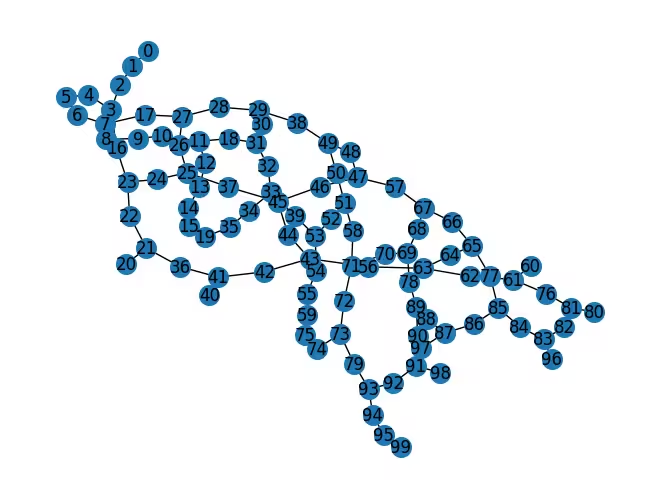
Den Graphen mit einem SAT-Mapper neu abbilden
Auch wenn ein Schaltkreis nur aus kommutierenden Gates besteht (das ist bei QAOA-Schaltkreisen der Fall, aber auch bei Trotterisierten Simulationen von Ising-Hamiltonians), ist das Finden eines guten Initialmappings eine anspruchsvolle Aufgabe. Der SAT-basierte Ansatz aus [2] ermöglicht das Finden effektiver Initialmappings für Schaltkreise mit kommutierenden Gates und führt zu einer deutlichen Reduzierung der Anzahl benötigter SWAP-Schichten. Dieser Ansatz wurde bis zu 500 Qubits skaliert, wie im Paper gezeigt wird.
Der folgende Code zeigt, wie man den SATMapper von Matsuo et al. verwendet, um den Graphen neu abzubilden. Damit kann das Problem auf einen optimaleren Ausgangszustand für eine bestimmte SWAP-Strategie abgebildet werden, was die Anzahl der für die Schaltkreisausführung benötigten SWAP-Schichten erheblich reduziert.
Im SATMapper wird das Problem, ein gutes Initialmapping zu finden, als SAT-Problem formuliert. Ein SAT-Solver wird verwendet, um ein solches Initialmapping für den QAOA-Schaltkreis zu finden. python-sat (kurz pysat) ist eine Python-Bibliothek für einen SAT-Solver — wir verwenden sie in diesem Beispiel zum Lösen des SAT-Problems.
"""A class to solve the SWAP gate insertion initial mapping problem
using the SAT approach from https://arxiv.org/abs/2212.05666.
"""

@dataclass
class SATResult:
    """A data class to hold the result of a SAT solver."""

    satisfiable: bool  # Satisfiable is True if the SAT model could be solved
    # in a given time.
    solution: dict  # The solution to the SAT problem if it is satisfiable.
    mapping: list  # The mapping of nodes in the pattern graph to nodes in the
    # target graph.
    elapsed_time: float  # The time it took to solve the SAT model.

class SATMapper:
    r"""A class to introduce a SAT-approach to solve
    the initial mapping problem in SWAP gate insertion for commuting gates.

    When this pass is run on a DAG it will look for the first instance of
    :class:`.Commuting2qBlock` and use the program graph :math:`P` of this block
    of gates to find a layout for a given swap strategy. This layout is found
    with a binary search over the layers :math:`l` of the swap strategy. At each
    considered layer a subgraph isomorphism problem formulated as a SAT is solved
    by a SAT solver. Each instance is whether it is possible to embed the program
    graph :math:`P` into the effective connectivity graph :math:`C_l` that is
    achieved by applying :math:`l` layers of the swap strategy to the coupling map
    :math:`C_0` of the backend. Since solving SAT problems can be hard, a
    ``time_out`` fixes the maximum time allotted to the SAT solver for each
    instance. If this time is exceeded the considered problem is deemed
    unsatisfiable and the binary search proceeds to the next number of swap
    layers :math:``l``.
    """

    def __init__(self, timeout: int = 60):
        """Initialize the SATMapping.

        Args:
            timeout: The allowed time in seconds for each iteration of the SAT
                solver. This variable defaults to 60 seconds.
        """
        self.timeout = timeout

    def find_initial_mappings(
        self,
        program_graph: rx.Graph,
        swap_strategy: SwapStrategy,
        min_layers: int | None = None,
        max_layers: int | None = None,
    ) -> dict[int, SATResult]:
        r"""Find an initial mapping for a given swap strategy. Perform a
        binary search over the number of swap layers, and for each number
        of swap layers solve a subgraph isomorphism problem formulated as
        a SAT problem.

        Args:
            program_graph (rx.Graph): The program graph with commuting gates, where
                                        each edge represents a two-qubit gate.
            swap_strategy (SwapStrategy): The swap strategy to use to find the
                                        initial mapping.
            min_layers (int): The minimum number of swap layers to consider.
                                        Defaults to the maximum degree of the
                                        program graph - 2.
            max_layers (int): The maximum number of swap layers to consider.
                                        Defaults to the number of qubits in the
                                        swap strategy - 2.

        Returns:
            dict[int, SATResult]: A dictionary containing the results of the SAT
                                    solver for each number of swap layers.
        """
        num_nodes_g1 = len(program_graph.nodes())
        num_nodes_g2 = swap_strategy.distance_matrix.shape[0]
        if num_nodes_g1 > num_nodes_g2:
            return SATResult(False, [], [], 0)
        if min_layers is None:
            # use the maximum degree of the program graph - 2
            # as the lower bound.
            min_layers = max((d for _, d in program_graph.degree)) - 2
        if max_layers is None:
            max_layers = num_nodes_g2 - 1

        variable_pool = IDPool(start_from=1)
        variables = np.array(
            [
                [variable_pool.id(f"v_{i}_{j}") for j in range(num_nodes_g2)]
                for i in range(num_nodes_g1)
            ],
            dtype=int,
        )
        vid2mapping = {v: idx for idx, v in np.ndenumerate(variables)}
        binary_search_results = {}

        def interrupt(solver):
            # This function is called to interrupt the solver when the
            # timeout is reached.
            solver.interrupt()

        # Make a cnf (conjunctive normal form) for the one-to-one
        # mapping constraint
        cnf1 = []
        for i in range(num_nodes_g1):
            clause = variables[i, :].tolist()
            cnf1.append(clause)
            for k, m in combinations(clause, 2):
                cnf1.append([-1 * k, -1 * m])
        for j in range(num_nodes_g2):
            clause = variables[:, j].tolist()
            for k, m in combinations(clause, 2):
                cnf1.append([-1 * k, -1 * m])

        # Perform a binary search over the number of swap layers to find the
        # minimum number of swap layers that satisfies the subgraph isomorphism
        # problem.
        while min_layers < max_layers:
            num_layers = (min_layers + max_layers) // 2

            # Create the connectivity matrix. Note that if the swap strategy
            # cannot reach full connectivity then its distance matrix will have
            # entries with -1. These entries must be treated as False.
            d_matrix = swap_strategy.distance_matrix
            connectivity_matrix = (
                (-1 < d_matrix) & (d_matrix <= num_layers)
            ).astype(int)
            # Make a cnf for the adjacency constraint
            cnf2 = []
            for e_0, e_1 in list(program_graph.edge_list()):
                clause_matrix = np.multiply(
                    connectivity_matrix, variables[e_1, :]
                )
                clause = np.concatenate(
                    (
                        [[-variables[e_0, i]] for i in range(num_nodes_g2)],
                        clause_matrix,
                    ),
                    axis=1,
                )
                # Remove 0s from each clause
                cnf2.extend([c[c != 0].tolist() for c in clause])

            cnf = CNF(from_clauses=cnf1 + cnf2)

            with Solver(bootstrap_with=cnf, use_timer=True) as solver:
                # Solve the SAT problem with a timeout.
                # Timer is used to interrupt the solver when the
                # timeout is reached.
                timer = Timer(self.timeout, interrupt, [solver])
                timer.start()
                status = solver.solve_limited(expect_interrupt=True)
                timer.cancel()
                # Get the solution and the elapsed time.
                sol = solver.get_model()
                e_time = solver.time()

                print(
                    f"Layers: {num_layers}, Status: {status}, Time: {e_time}"
                )
                if status:
                    # If the SAT problem is satisfiable, convert the solution
                    # to a mapping.
                    mapping = [vid2mapping[idx] for idx in sol if idx > 0]
                    binary_search_results[num_layers] = SATResult(
                        status, sol, mapping, e_time
                    )
                    max_layers = num_layers
                else:
                    # If the SAT problem is unsatisfiable, return the last
                    # satisfiable solution.
                    binary_search_results[num_layers] = SATResult(
                        status, sol, [], e_time
                    )
                    min_layers = num_layers + 1

        return binary_search_results

    def remap_graph_with_sat(
        self, graph: rx.Graph, swap_strategy, max_layers
    ):
        """Applies the SAT mapping.

        Args:
            graph (nx.Graph): The graph to remap.
            swap_strategy (SwapStrategy): The swap strategy to use
                                            to find the initial mapping.

        Returns:
            tuple: A tuple containing the remapped graph, the edge map, and the
            number of layers of the swap strategy that was used to find the
            initial mapping. If no solution is found then the tuple contains
            None for each element. Note the returned edge map `{k: v}` means that
            node `k` in the original graph gets mapped to node `v` in the
            Pauli strings.
        """
        num_nodes = len(graph.nodes())
        results = self.find_initial_mappings(
            graph, swap_strategy, 0, max_layers
        )
        solutions = [k for k, v in results.items() if v.satisfiable]

        if len(solutions):
            min_k = min(solutions)
            edge_map = dict(results[min_k].mapping)
            # Create the remapped graph
            remapped_graph = rx.PyGraph()
            remapped_graph.add_nodes_from(range(num_nodes))
            mapping = dict(results[min_k].mapping)
            for i, graph_edge in enumerate(list(graph.edge_list())):
                remapped_edge = tuple(mapping[node] for node in graph_edge)
                remapped_graph.add_edge(*remapped_edge, graph.edges()[i])
            return remapped_graph, edge_map, min_k
        else:
            return None, None, None
sm = SATMapper(timeout=10)
remapped_graph, edge_map, min_swap_layers = sm.remap_graph_with_sat(
    graph=graph_100, swap_strategy=swap_strategy, max_layers=1
)
print("Map from old to new nodes: ", edge_map)
print("Min SWAP layers:", min_swap_layers)
draw_graph(remapped_graph, node_size=200, with_labels=True, width=1)
Layers: 0, Status: True, Time: 0.022812999999999306
Map from old to new nodes:  {0: 0, 1: 1, 2: 2, 3: 3, 4: 4, 5: 5, 6: 6, 7: 7, 8: 8, 9: 9, 10: 10, 11: 11, 12: 12, 13: 13, 14: 14, 15: 15, 16: 16, 17: 17, 18: 18, 19: 19, 20: 20, 21: 21, 22: 22, 23: 23, 24: 24, 25: 25, 26: 26, 27: 27, 28: 28, 29: 29, 30: 30, 31: 31, 32: 32, 33: 33, 34: 34, 35: 35, 36: 36, 37: 37, 38: 38, 39: 39, 40: 40, 41: 41, 42: 42, 43: 43, 44: 44, 45: 45, 46: 46, 47: 47, 48: 48, 49: 49, 50: 50, 51: 51, 52: 52, 53: 53, 54: 54, 55: 55, 56: 56, 57: 57, 58: 58, 59: 59, 60: 60, 61: 61, 62: 62, 63: 63, 64: 64, 65: 65, 66: 66, 67: 67, 68: 68, 69: 69, 70: 70, 71: 71, 72: 72, 73: 73, 74: 74, 75: 75, 76: 76, 77: 77, 78: 78, 79: 79, 80: 80, 81: 81, 82: 82, 83: 83, 84: 84, 85: 85, 86: 86, 87: 87, 88: 88, 89: 89, 90: 90, 91: 91, 92: 92, 93: 93, 94: 94, 95: 95, 96: 96, 97: 97, 98: 98, 99: 99}
Min SWAP layers: 0
remapped_max_cut_paulis = build_max_cut_paulis(remapped_graph)
# define a qiskit SparsePauliOp from the list of paulis
remapped_cost_operator = SparsePauliOp.from_list(remapped_max_cut_paulis)
print(remapped_cost_operator)
SparsePauliOp(['IIIIIIIIIIIIIIIIIIIIIIIIIIIIIIIIIIIIIIIIIIIIIIIIIIIIIIIIIIIIIIIIIIIIIIIIIIIIIIIIIIIIIIIIIIIIIIIIIIZZ', 'IIIIIIIIIIIIIIIIIIIIIIIIIIIIIIIIIIIIIIIIIIIIIIIIIIIIIIIIIIIIIIIIIIIIIIIIIIIIIIIIIIIIIIIIIIIIIIIIIZZI', 'IIIIIIIIIIIIIIIIIIIIIIIIIIIIIIIIIIIIIIIIIIIIIIIIIIIIIIIIIIIIIIIIIIIIIIIIIIIIIIIIIIIIIIIIIIIIIIIIZZII', 'IIIIIIIIIIIIIIIIIIIIIIIIIIIIIIIIIIIIIIIIIIIIIIIIIIIIIIIIIIIIIIIIIIIIIIIIIIIIIIIIIIIIIIIIIIIIIIIZZIII', 'IIIIIIIIIIIIIIIIIIIIIIIIIIIIIIIIIIIIIIIIIIIIIIIIIIIIIIIIIIIIIIIIIIIIIIIIIIIIIIIIIIIZIIIIIIIIIIIIZIII', 'IIIIIIIIIIIIIIIIIIIIIIIIIIIIIIIIIIIIIIIIIIIIIIIIIIIIIIIIIIIIIIIIIIIIIIIIIIIIIIIIIIIIIIIIIIIIIIZZIIII', 'IIIIIIIIIIIIIIIIIIIIIIIIIIIIIIIIIIIIIIIIIIIIIIIIIIIIIIIIIIIIIIIIIIIIIIIIIIIIIIIIIIIIIIIIIIIIIZZIIIII', 'IIIIIIIIIIIIIIIIIIIIIIIIIIIIIIIIIIIIIIIIIIIIIIIIIIIIIIIIIIIIIIIIIIIIIIIIIIIIIIIIIIIIIIIIIIIIZZIIIIII', 'IIIIIIIIIIIIIIIIIIIIIIIIIIIIIIIIIIIIIIIIIIIIIIIIIIIIIIIIIIIIIIIIIIIIIIIIIIIIIIIIIIIIIIIIIIIZZIIIIIII', 'IIIIIIIIIIIIIIIIIIIIIIIIIIIIIIIIIIIIIIIIIIIIIIIIIIIIIIIIIIIIIIIIIIIIIIIIIIIIIIIIIIZIIIIIIIIIZIIIIIII', 'IIIIIIIIIIIIIIIIIIIIIIIIIIIIIIIIIIIIIIIIIIIIIIIIIIIIIIIIIIIIIIIIIIIIIIIIIIIIIIIIIIIIIIIIIIZZIIIIIIII', 'IIIIIIIIIIIIIIIIIIIIIIIIIIIIIIIIIIIIIIIIIIIIIIIIIIIIIIIIIIIIIIIIIIIIIIIIIIIIIIIIIIIIIIIIIZZIIIIIIIII', 'IIIIIIIIIIIIIIIIIIIIIIIIIIIIIIIIIIIIIIIIIIIIIIIIIIIIIIIIIIIIIIIIIIIIIIIIIIIIIIIIIIIIIIIIZZIIIIIIIIII', 'IIIIIIIIIIIIIIIIIIIIIIIIIIIIIIIIIIIIIIIIIIIIIIIIIIIIIIIIIIIIIIIIIIIIIIIIIIIIIIIIIIIIIIIZZIIIIIIIIIII', 'IIIIIIIIIIIIIIIIIIIIIIIIIIIIIIIIIIIIIIIIIIIIIIIIIIIIIIIIIIIIIIIIIIIIIIIIIIIIIIIIIZIIIIIIZIIIIIIIIIII', 'IIIIIIIIIIIIIIIIIIIIIIIIIIIIIIIIIIIIIIIIIIIIIIIIIIIIIIIIIIIIIIIIIIIIIIIIIIIIIIIIIIIIIIZZIIIIIIIIIIII', 'IIIIIIIIIIIIIIIIIIIIIIIIIIIIIIIIIIIIIIIIIIIIIIIIIIIIIIIIIIIIIIIIIIIIIIIIIIIIIIIIIIIIIZZIIIIIIIIIIIII', 'IIIIIIIIIIIIIIIIIIIIIIIIIIIIIIIIIIIIIIIIIIIIIIIIIIIIIIIIIIIIIIIIIIIIIIIIIIIIIIIIIIIIZZIIIIIIIIIIIIII', 'IIIIIIIIIIIIIIIIIIIIIIIIIIIIIIIIIIIIIIIIIIIIIIIIIIIIIIIIIIIIIIIIIIIIIIIIIIIIIIIIZIIIZIIIIIIIIIIIIIII', 'IIIIIIIIIIIIIIIIIIIIIIIIIIIIIIIIIIIIIIIIIIIIIIIIIIIIIIIIIIIIIIIIIIIIIIIIIIIIZIIIIIIZIIIIIIIIIIIIIIII', 'IIIIIIIIIIIIIIIIIIIIIIIIIIIIIIIIIIIIIIIIIIIIIIIIIIIIIIIIIIIIIIIIIIIIIIIIZIIIIIIIIIZIIIIIIIIIIIIIIIII', 'IIIIIIIIIIIIIIIIIIIIIIIIIIIIIIIIIIIIIIIIIIIIIIIIIIIIIIIIIIIIIIIIIIIIZIIIIIIIIIIIIZIIIIIIIIIIIIIIIIII', 'IIIIIIIIIIIIIIIIIIIIIIIIIIIIIIIIIIIIIIIIIIIIIIIIIIIIIIIIIIIIIIIIZIIIIIIIIIIIIIIIZIIIIIIIIIIIIIIIIIII', 'IIIIIIIIIIIIIIIIIIIIIIIIIIIIIIIIIIIIIIIIIIIIIIIIIIIIIIIIIIIIIIIIIIIIIIIIIIIIIIZZIIIIIIIIIIIIIIIIIIII', 'IIIIIIIIIIIIIIIIIIIIIIIIIIIIIIIIIIIIIIIIIIIIIIIIIIIIIIIIIIIIIIIIIIIIIIIIIIIIIZZIIIIIIIIIIIIIIIIIIIII', 'IIIIIIIIIIIIIIIIIIIIIIIIIIIIIIIIIIIIIIIIIIIIIIIIIIIIIIIIIIIIIIIZIIIIIIIIIIIIIIZIIIIIIIIIIIIIIIIIIIII', 'IIIIIIIIIIIIIIIIIIIIIIIIIIIIIIIIIIIIIIIIIIIIIIIIIIIIIIIIIIIIIIIIIIIIIIIIIIIIZZIIIIIIIIIIIIIIIIIIIIII', 'IIIIIIIIIIIIIIIIIIIIIIIIIIIIIIIIIIIIIIIIIIIIIIIIIIIIIIIIIIIIIIIIIIIIIIIIIIIZZIIIIIIIIIIIIIIIIIIIIIII', 'IIIIIIIIIIIIIIIIIIIIIIIIIIIIIIIIIIIIIIIIIIIIIIIIIIIIIIIIIIIIIIIIIIIIIIIIIIZZIIIIIIIIIIIIIIIIIIIIIIII', 'IIIIIIIIIIIIIIIIIIIIIIIIIIIIIIIIIIIIIIIIIIIIIIIIIIIIIIIIIIIIIIIIIIIIIIIIIZZIIIIIIIIIIIIIIIIIIIIIIIII', 'IIIIIIIIIIIIIIIIIIIIIIIIIIIIIIIIIIIIIIIIIIIIIIIIIIIIIIIIIIIIIIZIIIIIIIIIIIZIIIIIIIIIIIIIIIIIIIIIIIII', 'IIIIIIIIIIIIIIIIIIIIIIIIIIIIIIIIIIIIIIIIIIIIIIIIIIIIIIIIIIIIIIIIIIIIIIIIZZIIIIIIIIIIIIIIIIIIIIIIIIII', 'IIIIIIIIIIIIIIIIIIIIIIIIIIIIIIIIIIIIIIIIIIIIIIIIIIIIIIIIIIIIIIIIIIIIIIIZZIIIIIIIIIIIIIIIIIIIIIIIIIII', 'IIIIIIIIIIIIIIIIIIIIIIIIIIIIIIIIIIIIIIIIIIIIIIIIIIIIIIIIIIIIIIIIIIIIIIZZIIIIIIIIIIIIIIIIIIIIIIIIIIII', 'IIIIIIIIIIIIIIIIIIIIIIIIIIIIIIIIIIIIIIIIIIIIIIIIIIIIIIIIIIIIIIIIIIIIIZZIIIIIIIIIIIIIIIIIIIIIIIIIIIII', 'IIIIIIIIIIIIIIIIIIIIIIIIIIIIIIIIIIIIIIIIIIIIIIIIIIIIIIIIIIIIIZIIIIIIIIZIIIIIIIIIIIIIIIIIIIIIIIIIIIII', 'IIIIIIIIIIIIIIIIIIIIIIIIIIIIIIIIIIIIIIIIIIIIIIIIIIIIIIIIIIIIIIIIIIIIZZIIIIIIIIIIIIIIIIIIIIIIIIIIIIII', 'IIIIIIIIIIIIIIIIIIIIIIIIIIIIIIIIIIIIIIIIIIIIIIIIIIIIIIIIIIIIIIIIIIIZZIIIIIIIIIIIIIIIIIIIIIIIIIIIIIII', 'IIIIIIIIIIIIIIIIIIIIIIIIIIIIIIIIIIIIIIIIIIIIIIIIIIIIIIIIIIIIIIIIIIZZIIIIIIIIIIIIIIIIIIIIIIIIIIIIIIII', 'IIIIIIIIIIIIIIIIIIIIIIIIIIIIIIIIIIIIIIIIIIIIIIIIIIIIIIIIIIIIIIIIIZZIIIIIIIIIIIIIIIIIIIIIIIIIIIIIIIII', 'IIIIIIIIIIIIIIIIIIIIIIIIIIIIIIIIIIIIIIIIIIIIIIIIIIIIIIIIIIIIZIIIIIZIIIIIIIIIIIIIIIIIIIIIIIIIIIIIIIII', 'IIIIIIIIIIIIIIIIIIIIIIIIIIIIIIIIIIIIIIIIIIIIIIIIIIIIIIIIIIIIIIIIZZIIIIIIIIIIIIIIIIIIIIIIIIIIIIIIIIII', 'IIIIIIIIIIIIIIIIIIIIIIIIIIIIIIIIIIIIIIIIIIIIIIIIIIIIIIIIIIZIIIIZIIIIIIIIIIIIIIIIIIIIIIIIIIIIIIIIIIII', 'IIIIIIIIIIIIIIIIIIIIIIIIIIIIIIIIIIIIIIIIIIIIIIIIIIIIIIZIIIIIIIZIIIIIIIIIIIIIIIIIIIIIIIIIIIIIIIIIIIII', 'IIIIIIIIIIIIIIIIIIIIIIIIIIIIIIIIIIIIIIIIIIIIIIIIIIZIIIIIIIIIIZIIIIIIIIIIIIIIIIIIIIIIIIIIIIIIIIIIIIII', 'IIIIIIIIIIIIIIIIIIIIIIIIIIIIIIIIIIIIIIIIIIIIIIZIIIIIIIIIIIIIZIIIIIIIIIIIIIIIIIIIIIIIIIIIIIIIIIIIIIII', 'IIIIIIIIIIIIIIIIIIIIIIIIIIIIIIIIIIIIIIIIIIIIIIIIIIIIIIIIIIZZIIIIIIIIIIIIIIIIIIIIIIIIIIIIIIIIIIIIIIII', 'IIIIIIIIIIIIIIIIIIIIIIIIIIIIIIIIIIIIIIIIIIIIIIIIIIIIIIIIIZZIIIIIIIIIIIIIIIIIIIIIIIIIIIIIIIIIIIIIIIII', 'IIIIIIIIIIIIIIIIIIIIIIIIIIIIIIIIIIIIIIIIIIIIIIIIIIIIIIIIZZIIIIIIIIIIIIIIIIIIIIIIIIIIIIIIIIIIIIIIIIII', 'IIIIIIIIIIIIIIIIIIIIIIIIIIIIIIIIIIIIIIIIIIIIIIIIIIIIIIIZZIIIIIIIIIIIIIIIIIIIIIIIIIIIIIIIIIIIIIIIIIII', 'IIIIIIIIIIIIIIIIIIIIIIIIIIIIIIIIIIIIIIIIIIIZIIIIIIIIIIIIZIIIIIIIIIIIIIIIIIIIIIIIIIIIIIIIIIIIIIIIIIII', 'IIIIIIIIIIIIIIIIIIIIIIIIIIIIIIIIIIIIIIIIIIIIIIIIIIIIIIZZIIIIIIIIIIIIIIIIIIIIIIIIIIIIIIIIIIIIIIIIIIII', 'IIIIIIIIIIIIIIIIIIIIIIIIIIIIIIIIIIIIIIIIIIIIIIIIIIIIIZZIIIIIIIIIIIIIIIIIIIIIIIIIIIIIIIIIIIIIIIIIIIII', 'IIIIIIIIIIIIIIIIIIIIIIIIIIIIIIIIIIIIIIIIIIIIIIIIIIIIZZIIIIIIIIIIIIIIIIIIIIIIIIIIIIIIIIIIIIIIIIIIIIII', 'IIIIIIIIIIIIIIIIIIIIIIIIIIIIIIIIIIIIIIIIIIIIIIIIIIIZZIIIIIIIIIIIIIIIIIIIIIIIIIIIIIIIIIIIIIIIIIIIIIII', 'IIIIIIIIIIIIIIIIIIIIIIIIIIIIIIIIIIIIIIIIIIZIIIIIIIIIZIIIIIIIIIIIIIIIIIIIIIIIIIIIIIIIIIIIIIIIIIIIIIII', 'IIIIIIIIIIIIIIIIIIIIIIIIIIIIIIIIIIIIIIIIIIIIIIIIIIZZIIIIIIIIIIIIIIIIIIIIIIIIIIIIIIIIIIIIIIIIIIIIIIII', 'IIIIIIIIIIIIIIIIIIIIIIIIIIIIIIIIIIIIIIIIIIIIIIIIIZZIIIIIIIIIIIIIIIIIIIIIIIIIIIIIIIIIIIIIIIIIIIIIIIII', 'IIIIIIIIIIIIIIIIIIIIIIIIIIIIIIIIIIIIIIIIIIIIIIIIZZIIIIIIIIIIIIIIIIIIIIIIIIIIIIIIIIIIIIIIIIIIIIIIIIII', 'IIIIIIIIIIIIIIIIIIIIIIIIIIIIIIIIIIIIIIIIIIIIIIIZZIIIIIIIIIIIIIIIIIIIIIIIIIIIIIIIIIIIIIIIIIIIIIIIIIII', 'IIIIIIIIIIIIIIIIIIIIIIIIIIIIIIIIIIIIIIIIIZIIIIIIZIIIIIIIIIIIIIIIIIIIIIIIIIIIIIIIIIIIIIIIIIIIIIIIIIII', 'IIIIIIIIIIIIIIIIIIIIIIIIIIIIIIIIIIIIIIIIIIIIIIZZIIIIIIIIIIIIIIIIIIIIIIIIIIIIIIIIIIIIIIIIIIIIIIIIIIII', 'IIIIIIIIIIIIIIIIIIIIIIIIIIIIIIIIIIIIIIIIIIIIIZZIIIIIIIIIIIIIIIIIIIIIIIIIIIIIIIIIIIIIIIIIIIIIIIIIIIII', 'IIIIIIIIIIIIIIIIIIIIIIIIIIIIIIIIIIIIIIIIIIIIZZIIIIIIIIIIIIIIIIIIIIIIIIIIIIIIIIIIIIIIIIIIIIIIIIIIIIII', 'IIIIIIIIIIIIIIIIIIIIIIIIIIIIIIIIIIIIIIIIZIIIZIIIIIIIIIIIIIIIIIIIIIIIIIIIIIIIIIIIIIIIIIIIIIIIIIIIIIII', 'IIIIIIIIIIIIIIIIIIIIIIIIIIIIIIIIIIIIZIIIIIIZIIIIIIIIIIIIIIIIIIIIIIIIIIIIIIIIIIIIIIIIIIIIIIIIIIIIIIII', 'IIIIIIIIIIIIIIIIIIIIIIIIIIIIIIIIZIIIIIIIIIZIIIIIIIIIIIIIIIIIIIIIIIIIIIIIIIIIIIIIIIIIIIIIIIIIIIIIIIII', 'IIIIIIIIIIIIIIIIIIIIIIIIIIIIZIIIIIIIIIIIIZIIIIIIIIIIIIIIIIIIIIIIIIIIIIIIIIIIIIIIIIIIIIIIIIIIIIIIIIII', 'IIIIIIIIIIIIIIIIIIIIIIIIZIIIIIIIIIIIIIIIZIIIIIIIIIIIIIIIIIIIIIIIIIIIIIIIIIIIIIIIIIIIIIIIIIIIIIIIIIII', 'IIIIIIIIIIIIIIIIIIIIIIIIIIIIIIIIIIIIIIZZIIIIIIIIIIIIIIIIIIIIIIIIIIIIIIIIIIIIIIIIIIIIIIIIIIIIIIIIIIII', 'IIIIIIIIIIIIIIIIIIIIIIIIIIIIIIIIIIIIIZZIIIIIIIIIIIIIIIIIIIIIIIIIIIIIIIIIIIIIIIIIIIIIIIIIIIIIIIIIIIII', 'IIIIIIIIIIIIIIIIIIIIIIIZIIIIIIIIIIIIIIZIIIIIIIIIIIIIIIIIIIIIIIIIIIIIIIIIIIIIIIIIIIIIIIIIIIIIIIIIIIII', 'IIIIIIIIIIIIIIIIIIIIIIIIIIIIIIIIIIIIZZIIIIIIIIIIIIIIIIIIIIIIIIIIIIIIIIIIIIIIIIIIIIIIIIIIIIIIIIIIIIII', 'IIIIIIIIIIIIIIIIIIIIIIIIIIIIIIIIIIIZZIIIIIIIIIIIIIIIIIIIIIIIIIIIIIIIIIIIIIIIIIIIIIIIIIIIIIIIIIIIIIII', 'IIIIIIIIIIIIIIIIIIIIIIIIIIIIIIIIIIZZIIIIIIIIIIIIIIIIIIIIIIIIIIIIIIIIIIIIIIIIIIIIIIIIIIIIIIIIIIIIIIII', 'IIIIIIIIIIIIIIIIIIIIIIIIIIIIIIIIIZZIIIIIIIIIIIIIIIIIIIIIIIIIIIIIIIIIIIIIIIIIIIIIIIIIIIIIIIIIIIIIIIII', 'IIIIIIIIIIIIIIIIIIIIIIZIIIIIIIIIIIZIIIIIIIIIIIIIIIIIIIIIIIIIIIIIIIIIIIIIIIIIIIIIIIIIIIIIIIIIIIIIIIII', 'IIIIIIIIIIIIIIIIIIIIIIIIIIIIIIIIZZIIIIIIIIIIIIIIIIIIIIIIIIIIIIIIIIIIIIIIIIIIIIIIIIIIIIIIIIIIIIIIIIII', 'IIIIIIIIIIIIIIIIIIIIIIIIIIIIIIIZZIIIIIIIIIIIIIIIIIIIIIIIIIIIIIIIIIIIIIIIIIIIIIIIIIIIIIIIIIIIIIIIIIII', 'IIIIIIIIIIIIIIIIIIIIIIIIIIIIIIZZIIIIIIIIIIIIIIIIIIIIIIIIIIIIIIIIIIIIIIIIIIIIIIIIIIIIIIIIIIIIIIIIIIII', 'IIIIIIIIIIIIIIIIIIIIIIIIIIIIIZZIIIIIIIIIIIIIIIIIIIIIIIIIIIIIIIIIIIIIIIIIIIIIIIIIIIIIIIIIIIIIIIIIIIII', 'IIIIIIIIIIIIIIIIIIIIIZIIIIIIIIZIIIIIIIIIIIIIIIIIIIIIIIIIIIIIIIIIIIIIIIIIIIIIIIIIIIIIIIIIIIIIIIIIIIII', 'IIIIIIIIIIIIIIIIIIIIIIIIIIIIZZIIIIIIIIIIIIIIIIIIIIIIIIIIIIIIIIIIIIIIIIIIIIIIIIIIIIIIIIIIIIIIIIIIIIII', 'IIIIIIIIIIIIIIIIIIIIIIIIIIIZZIIIIIIIIIIIIIIIIIIIIIIIIIIIIIIIIIIIIIIIIIIIIIIIIIIIIIIIIIIIIIIIIIIIIIII', 'IIIIIIIIIIIIIIIIIIIIIIIIIIZZIIIIIIIIIIIIIIIIIIIIIIIIIIIIIIIIIIIIIIIIIIIIIIIIIIIIIIIIIIIIIIIIIIIIIIII', 'IIIIIIIIIIIIIIIIIIIIIIIIIZZIIIIIIIIIIIIIIIIIIIIIIIIIIIIIIIIIIIIIIIIIIIIIIIIIIIIIIIIIIIIIIIIIIIIIIIII', 'IIIIIIIIIIIIIIIIIIIIZIIIIIZIIIIIIIIIIIIIIIIIIIIIIIIIIIIIIIIIIIIIIIIIIIIIIIIIIIIIIIIIIIIIIIIIIIIIIIII', 'IIIIIIIIIIIIIIIIIIIIIIIIZZIIIIIIIIIIIIIIIIIIIIIIIIIIIIIIIIIIIIIIIIIIIIIIIIIIIIIIIIIIIIIIIIIIIIIIIIII', 'IIIIIIIIIIIIIIIIIIZIIIIZIIIIIIIIIIIIIIIIIIIIIIIIIIIIIIIIIIIIIIIIIIIIIIIIIIIIIIIIIIIIIIIIIIIIIIIIIIII', 'IIIIIIIIIIIIIIZIIIIIIIZIIIIIIIIIIIIIIIIIIIIIIIIIIIIIIIIIIIIIIIIIIIIIIIIIIIIIIIIIIIIIIIIIIIIIIIIIIIII', 'IIIIIIIIIIZIIIIIIIIIIZIIIIIIIIIIIIIIIIIIIIIIIIIIIIIIIIIIIIIIIIIIIIIIIIIIIIIIIIIIIIIIIIIIIIIIIIIIIIII', 'IIIIIIZIIIIIIIIIIIIIZIIIIIIIIIIIIIIIIIIIIIIIIIIIIIIIIIIIIIIIIIIIIIIIIIIIIIIIIIIIIIIIIIIIIIIIIIIIIIII', 'IIIIIIIIIIIIIIIIIIZZIIIIIIIIIIIIIIIIIIIIIIIIIIIIIIIIIIIIIIIIIIIIIIIIIIIIIIIIIIIIIIIIIIIIIIIIIIIIIIII', 'IIIIIIIIIIIIIIIIIZZIIIIIIIIIIIIIIIIIIIIIIIIIIIIIIIIIIIIIIIIIIIIIIIIIIIIIIIIIIIIIIIIIIIIIIIIIIIIIIIII', 'IIIIIIIIIIIIIIIIZZIIIIIIIIIIIIIIIIIIIIIIIIIIIIIIIIIIIIIIIIIIIIIIIIIIIIIIIIIIIIIIIIIIIIIIIIIIIIIIIIII', 'IIIIIIIIIIIIIIIZZIIIIIIIIIIIIIIIIIIIIIIIIIIIIIIIIIIIIIIIIIIIIIIIIIIIIIIIIIIIIIIIIIIIIIIIIIIIIIIIIIII', 'IIIZIIIIIIIIIIIIZIIIIIIIIIIIIIIIIIIIIIIIIIIIIIIIIIIIIIIIIIIIIIIIIIIIIIIIIIIIIIIIIIIIIIIIIIIIIIIIIIII', 'IIIIIIIIIIIIIIZZIIIIIIIIIIIIIIIIIIIIIIIIIIIIIIIIIIIIIIIIIIIIIIIIIIIIIIIIIIIIIIIIIIIIIIIIIIIIIIIIIIII', 'IIIIIIIIIIIIIZZIIIIIIIIIIIIIIIIIIIIIIIIIIIIIIIIIIIIIIIIIIIIIIIIIIIIIIIIIIIIIIIIIIIIIIIIIIIIIIIIIIIII', 'IIIIIIIIIIIIZZIIIIIIIIIIIIIIIIIIIIIIIIIIIIIIIIIIIIIIIIIIIIIIIIIIIIIIIIIIIIIIIIIIIIIIIIIIIIIIIIIIIIII', 'IIIIIIIIIIIZZIIIIIIIIIIIIIIIIIIIIIIIIIIIIIIIIIIIIIIIIIIIIIIIIIIIIIIIIIIIIIIIIIIIIIIIIIIIIIIIIIIIIIII', 'IIZIIIIIIIIIZIIIIIIIIIIIIIIIIIIIIIIIIIIIIIIIIIIIIIIIIIIIIIIIIIIIIIIIIIIIIIIIIIIIIIIIIIIIIIIIIIIIIIII', 'IIIIIIIIIIZZIIIIIIIIIIIIIIIIIIIIIIIIIIIIIIIIIIIIIIIIIIIIIIIIIIIIIIIIIIIIIIIIIIIIIIIIIIIIIIIIIIIIIIII', 'IIIIIIIIIZZIIIIIIIIIIIIIIIIIIIIIIIIIIIIIIIIIIIIIIIIIIIIIIIIIIIIIIIIIIIIIIIIIIIIIIIIIIIIIIIIIIIIIIIII', 'IIIIIIIIZZIIIIIIIIIIIIIIIIIIIIIIIIIIIIIIIIIIIIIIIIIIIIIIIIIIIIIIIIIIIIIIIIIIIIIIIIIIIIIIIIIIIIIIIIII', 'IIIIIIIZZIIIIIIIIIIIIIIIIIIIIIIIIIIIIIIIIIIIIIIIIIIIIIIIIIIIIIIIIIIIIIIIIIIIIIIIIIIIIIIIIIIIIIIIIIII', 'IZIIIIIIZIIIIIIIIIIIIIIIIIIIIIIIIIIIIIIIIIIIIIIIIIIIIIIIIIIIIIIIIIIIIIIIIIIIIIIIIIIIIIIIIIIIIIIIIIII', 'IIIIIIZZIIIIIIIIIIIIIIIIIIIIIIIIIIIIIIIIIIIIIIIIIIIIIIIIIIIIIIIIIIIIIIIIIIIIIIIIIIIIIIIIIIIIIIIIIIII', 'IIIIIZZIIIIIIIIIIIIIIIIIIIIIIIIIIIIIIIIIIIIIIIIIIIIIIIIIIIIIIIIIIIIIIIIIIIIIIIIIIIIIIIIIIIIIIIIIIIII', 'IIIIZZIIIIIIIIIIIIIIIIIIIIIIIIIIIIIIIIIIIIIIIIIIIIIIIIIIIIIIIIIIIIIIIIIIIIIIIIIIIIIIIIIIIIIIIIIIIIII', 'ZIIIZIIIIIIIIIIIIIIIIIIIIIIIIIIIIIIIIIIIIIIIIIIIIIIIIIIIIIIIIIIIIIIIIIIIIIIIIIIIIIIIIIIIIIIIIIIIIIII'],
              coeffs=[1.+0.j, 1.+0.j, 1.+0.j, 1.+0.j, 1.+0.j, 1.+0.j, 1.+0.j, 1.+0.j, 1.+0.j,
 1.+0.j, 1.+0.j, 1.+0.j, 1.+0.j, 1.+0.j, 1.+0.j, 1.+0.j, 1.+0.j, 1.+0.j,
 1.+0.j, 1.+0.j, 1.+0.j, 1.+0.j, 1.+0.j, 1.+0.j, 1.+0.j, 1.+0.j, 1.+0.j,
 1.+0.j, 1.+0.j, 1.+0.j, 1.+0.j, 1.+0.j, 1.+0.j, 1.+0.j, 1.+0.j, 1.+0.j,
 1.+0.j, 1.+0.j, 1.+0.j, 1.+0.j, 1.+0.j, 1.+0.j, 1.+0.j, 1.+0.j, 1.+0.j,
 1.+0.j, 1.+0.j, 1.+0.j, 1.+0.j, 1.+0.j, 1.+0.j, 1.+0.j, 1.+0.j, 1.+0.j,
 1.+0.j, 1.+0.j, 1.+0.j, 1.+0.j, 1.+0.j, 1.+0.j, 1.+0.j, 1.+0.j, 1.+0.j,
 1.+0.j, 1.+0.j, 1.+0.j, 1.+0.j, 1.+0.j, 1.+0.j, 1.+0.j, 1.+0.j, 1.+0.j,
 1.+0.j, 1.+0.j, 1.+0.j, 1.+0.j, 1.+0.j, 1.+0.j, 1.+0.j, 1.+0.j, 1.+0.j,
 1.+0.j, 1.+0.j, 1.+0.j, 1.+0.j, 1.+0.j, 1.+0.j, 1.+0.j, 1.+0.j, 1.+0.j,
 1.+0.j, 1.+0.j, 1.+0.j, 1.+0.j, 1.+0.j, 1.+0.j, 1.+0.j, 1.+0.j, 1.+0.j,
 1.+0.j, 1.+0.j, 1.+0.j, 1.+0.j, 1.+0.j, 1.+0.j, 1.+0.j, 1.+0.j, 1.+0.j,
 1.+0.j, 1.+0.j, 1.+0.j])
QAOA-Schaltkreis mit SWAP-Strategie und SAT-Mapping erstellen
Wir wollen die SWAP-Strategien nur auf die Kosten-Operator-Schicht anwenden, deshalb erstellen wir zuerst den isolierten Block, den wir später transformieren und an den endgültigen QAOA-Schaltkreis anhängen.
Dafür können wir die QAOAAnsatz-Klasse aus Qiskit verwenden. Wir geben einen leeren Schaltkreis in die Felder initial_state und mixer_operator ein, um sicherzustellen, dass wir eine isolierte Kosten-Operator-Schicht aufbauen.
Wir definieren außerdem die edge_coloring-Map, damit RZZ-Gates direkt vor SWAP-Gates positioniert werden. Diese strategische Platzierung ermöglicht es, CX-Auslöschungen zu nutzen, was den Schaltkreis für bessere Leistung optimiert.
Dieser Prozess wird in der Funktion create_qaoa_swap_circuit ausgeführt.
def make_meas_map(circuit: QuantumCircuit) -> dict:
    """Return a mapping from qubit index (the key) to classical bit (the value).

    This allows us to account for the swapping order introduced by the SWAP strategy.
    """
    creg = circuit.cregs[0]
    qreg = circuit.qregs[0]

    meas_map = {}
    for inst in circuit.data:
        if inst.operation.name == "measure":
            meas_map[qreg.index(inst.qubits[0])] = creg.index(inst.clbits[0])

    return meas_map

def apply_swap_strategy(
    circuit: QuantumCircuit,
    swap_strategy: SwapStrategy,
    edge_coloring: dict[tuple[int, int], int] | None = None,
) -> QuantumCircuit:
    """Transpile with a SWAP strategy.

    Returns:
        A quantum circuit transpiled with the given swap strategy.
    """

    pm_pre = PassManager(
        [
            FindCommutingPauliEvolutions(),
            Commuting2qGateRouter(
                swap_strategy,
                edge_coloring,
            ),
        ]
    )
    return pm_pre.run(circuit)

def apply_qaoa_layers(
    cost_layer: QuantumCircuit,
    meas_map: dict,
    num_layers: int,
    gamma: list[float] | ParameterVector = None,
    beta: list[float] | ParameterVector = None,
    initial_state: QuantumCircuit = None,
    mixer: QuantumCircuit = None,
):
    """Applies QAOA layers to construct circuit.

    First, the initial state is applied. If `initial_state` is None, we begin in the
    initial superposition state. Next, we alternate between layers of the cost operator
    and the mixer. The cost operator is alternatively applied in order and in reverse
    instruction order. This allows us to apply the swap strategy on odd `p` layers
    and undo the swap strategy on even `p` layers.
    """

    num_qubits = cost_layer.num_qubits
    new_circuit = QuantumCircuit(num_qubits, num_qubits)

    if initial_state is not None:
        new_circuit.append(initial_state, range(num_qubits))
    else:
        # all h state by default
        new_circuit.h(range(num_qubits))

    if gamma is None or beta is None:
        gamma = ParameterVector("γ'", num_layers)
        if mixer is None or mixer.num_parameters == 0:
            beta = ParameterVector("β'", num_layers)
        else:
            beta = ParameterVector("β'", num_layers * mixer.num_parameters)

    if mixer is not None:
        mixer_layer = mixer
    else:
        mixer_layer = QuantumCircuit(num_qubits)
        mixer_layer.rx(-2 * beta[0], range(num_qubits))

    for layer in range(num_layers):
        bind_dict = {cost_layer.parameters[0]: gamma[layer]}
        cost_layer_ = cost_layer.assign_parameters(bind_dict)
        bind_dict = {
            mixer_layer.parameters[i]: beta[layer + i]
            for i in range(mixer_layer.num_parameters)
        }
        layer_mixer = mixer_layer.assign_parameters(bind_dict)

        if layer % 2 == 0:
            new_circuit.append(cost_layer_, range(num_qubits))
        else:
            new_circuit.append(cost_layer_.reverse_ops(), range(num_qubits))

        new_circuit.append(layer_mixer, range(num_qubits))

    for qidx, cidx in meas_map.items():
        new_circuit.measure(qidx, cidx)

    return new_circuit

def create_qaoa_swap_circuit(
    cost_operator: SparsePauliOp,
    swap_strategy: SwapStrategy,
    edge_coloring: dict = None,
    theta: list[float] = None,
    qaoa_layers: int = 1,
    initial_state: QuantumCircuit = None,
    mixer: QuantumCircuit = None,
):
    """Create the circuit for QAOA.

    Notes: This circuit construction for QAOA works for quadratic terms in `Z` and will be
    extended to first-order terms in `Z`. Higher-orders are not supported.

    Args:
        cost_operator: the cost operator.
        swap_strategy: selected swap strategy
        edge_coloring: A coloring of edges that should correspond to the coupling
            map of the hardware. It defines the order in which we apply the Rzz
            gates. This allows us to choose an ordering such that `Rzz` gates will
            immediately precede SWAP gates to leverage CNOT cancellation.
        theta: The QAOA angles.
        qaoa_layers: The number of layers of the cost operator and the mixer operator.
        initial_state: The initial state on which we apply layers of cost operator
            and mixer.
        mixer: The QAOA mixer. It will be applied as is onto the QAOA circuit. Therefore,
            its output must have the same ordering of qubits as its input.
    """

    num_qubits = cost_operator.num_qubits

    if theta is not None:
        gamma = theta[: len(theta) // 2]
        beta = theta[len(theta) // 2 :]
        qaoa_layers = len(theta) // 2
    else:
        gamma = beta = None

    # First, create the ansatz of one layer of QAOA without mixer
    cost_layer = QAOAAnsatz(
        cost_operator,
        reps=1,
        initial_state=QuantumCircuit(num_qubits),
        mixer_operator=QuantumCircuit(num_qubits),
    ).decompose()

    # This will allow us to recover the permutation of the measurements that the swaps introduce.
    cost_layer.measure_all()

    # Now, apply the swap strategy for commuting gates
    cost_layer = apply_swap_strategy(cost_layer, swap_strategy, edge_coloring)

    # Compute the measurement map (qubit to classical bit).
    # We will apply this for odd layers where the swaps were inserted.
    if qaoa_layers % 2 == 1:
        meas_map = make_meas_map(cost_layer)
    else:
        meas_map = {idx: idx for idx in range(num_qubits)}

    cost_layer.remove_final_measurements()

    # Finally, introduce the mixer circuit and add measurements following measurement map
    circuit = apply_qaoa_layers(
        cost_layer, meas_map, qaoa_layers, gamma, beta, initial_state, mixer
    )

    return circuit
# We can define the edge_coloring map so that RZZ gates are positioned right before SWAP gates to exploit CX cancellations
# We use greedy edge coloring from rustworkx to color the edges of the graph. This coloring is used to order the RZZ gates in the circuit.

edge_coloring_idx = rx.graph_greedy_edge_color(graph_100)
edge_coloring = {
    edge: edge_coloring_idx[idx]
    for idx, edge in enumerate(list(graph_100.edge_list()))
}
edge_coloring = {tuple(sorted(k)): v for k, v in edge_coloring.items()}
qaoa_circ = create_qaoa_swap_circuit(
    remapped_cost_operator,
    swap_strategy,
    edge_coloring=edge_coloring,
    qaoa_layers=1,
)
qaoa_circ.draw(output="mpl", fold=False)
/Users/mirko/Workspace/documentation/.venv/lib/python3.13/site-packages/qiskit/circuit/quantumcircuit.py:4625: UserWarning: Trying to add QuantumRegister to a QuantumCircuit having a layout
  circ.add_register(qreg)

Schritt 3: Mit Qiskit-Primitiven ausführen
CVaR-Kostenfunktion definieren
Dieses Beispiel zeigt, wie man die in [3] eingeführte CVaR-Kostenfunktion (Conditional Value at Risk) in variationellen Quantenoptimierungsalgorithmen verwendet.
Der CVaR einer Zufallsvariable für ein Konfidenzniveau ist definiert als wobei die inverse kumulative Verteilungsfunktion von ist. Mit anderen Worten: CVaR ist der Erwartungswert des unteren -Tails der Verteilung von .
pass_manager = generate_preset_pass_manager(
    backend=backend,
    optimization_level=3,
)

transpiled_qaoa_circ = pass_manager.run(qaoa_circ)
# Utility functions for the evaluation of the expectation value of a measured state
# In this code, for optimization, the measured state is converted into a bit string,
# and the sign of the value is determined by taking the exclusive OR of the bits
# corresponding to Pauli Z.

_PARITY = np.array(
    [-1 if bin(i).count("1") % 2 else 1 for i in range(256)],
    dtype=np.complex128,
)

def evaluate_sparse_pauli(state: int, observable: SparsePauliOp) -> complex:
    """Utility for the evaluation of the expectation value of a measured state.

    Args:
        state (int): The measured state.
        observable (SparsePauliOp): The observable to evaluate the expectation value for.

    Returns:
        complex: The expectation value of the measured state.
    """
    packed_uint8 = np.packbits(
        observable.paulis.z, axis=1, bitorder="little"
    )  # convert observable to array with 8 bit integer
    state_bytes = np.frombuffer(
        state.to_bytes(packed_uint8.shape[1], "little"),
        dtype=np.uint8,  # convert bitstring to array with 8 bit integer
    )
    reduced = np.bitwise_xor.reduce(
        packed_uint8 & state_bytes, axis=1
    )  # take bitwise xor of the result of 'and' conditional on the above two, return 0 or 1
    return np.sum(observable.coeffs * _PARITY[reduced])
def qaoa_sampler_cost_fun(
    params, ansatz, hamiltonian, sampler, aggregation=None
):
    """Standard sampler-based QAOA cost function to be plugged into optimizer routines.

    Args:
        params (np.ndarray): Parameters for the ansatz.
        ansatz (QuantumCircuit): Ansatz circuit.
        hamiltonian (SparsePauliOp): Hamiltonian to be minimized.
        sampler (QAOASampler): Sampler to be used.
        aggregation (Callable | float | None): Aggregation function to be applied to
            the sampled results. If None, the sum of the expectation values is returned.
            If float, the CVaR with the given alpha is used.
    """
    # Run the circuit
    job = sampler.run([(ansatz, params)])
    sampler_result = job.result()
    sampled_int_counts = sampler_result[
        0
    ].data.c.get_int_counts()  # bitstrings are stored as integers
    shots = sum(sampled_int_counts.values())
    int_count_distribution = {
        key: val / shots for key, val in sampled_int_counts.items()
    }

    # a dictionary containing: {state: (measurement probability, value)}
    evaluated = {
        state: (
            probability,
            np.real(evaluate_sparse_pauli(state, hamiltonian)),
        )
        for state, probability in int_count_distribution.items()
    }

    # If aggregation is None, return the sum of the expectation values.
    # If aggregation is a float, return the CVaR with the given alpha.
    # Otherwise, use the aggregation function.
    if aggregation is None:
        result = sum(
            probability * value for probability, value in evaluated.values()
        )
    elif isinstance(aggregation, float):
        cvar_aggregation = _get_cvar_aggregation(aggregation)
        result = cvar_aggregation(evaluated.values())
    else:
        result = aggregation(evaluated.values())

    global iter_counts, result_dict
    iter_counts += 1
    temp_dict = {}
    temp_dict["params"] = params.tolist()
    temp_dict["cvar_fval"] = result
    temp_dict["fval"] = sum(
        probability * value for probability, value in evaluated.values()
    )
    temp_dict["distribution"] = sampled_int_counts
    temp_dict["evaluated"] = evaluated
    result_dict[iter_counts] = temp_dict
    print(f"Iteration {iter_counts}: {result}")

    return result

def _get_cvar_aggregation(alpha: float | None) -> Callable:
    """Return the CVaR aggregation function with the given alpha.

    Args:
        alpha (float | None): Alpha value for the CVaR aggregation. If None, 1 is used
            by default.
    Raises:
        ValueError: If alpha is not in [0, 1].
    """
    if alpha is None:
        alpha = 1
    elif not 0 <= alpha <= 1:
        raise ValueError(f"alpha must be in [0, 1], but {alpha} was given.")

    def cvar_aggregation(
        objective_dict: Iterable[tuple[float, float]],
    ) -> float:
        """Return the CVaR of the given measurements.
        Args:
            objective_dict (Iterable[tuple[float, float]]): An iterable of tuples containing
                the measured bit string and the objective value based on the bit string.

        """
        sorted_measurements = sorted(objective_dict, key=lambda x: x[1])
        # accumulate the probabilities until alpha is reached
        accumulated_percent = 0.0
        cvar = 0.0
        for probability, value in sorted_measurements:
            cvar += value * min(probability, alpha - accumulated_percent)
            accumulated_percent += probability
            if accumulated_percent >= alpha:
                break
        return cvar / alpha

    return cvar_aggregation
Der CVaR kann — wie zuvor besprochen [4] — als Fehlermittelungstechnik eingesetzt werden. In diesem Beispiel bestimmen wir und die Anzahl der Shots nach der Fehlerrate des Schaltkreises.
num_2q_ops = transpiled_qaoa_circ.count_ops()[
    "cz"
]  # the two qubit gates on our backend are cz's.

for el in backend.properties().general:
    if el.name[:2] == "lf" and el.name[3:] == str(
        n
    ):  # pick out lf_100, lf of the best 100q chain
        lf = el.value  # layer fidelity
        print("layer fidelity", lf)
        eplg = 1 - lf ** (1 / (n - 1))  # error per layered gate (EPLG)
        fid_cz = 1 - eplg
        gamma_cz = 1 / fid_cz**2
        gamma_circ = gamma_cz**num_2q_ops

cvar_aggregation = 1 / np.sqrt(gamma_circ)
print("")
print("The corresponding CVaR aggregation value is: ", cvar_aggregation)
print(
    "To mitigate the twirled noise, increase shots by a factor of",
    np.sqrt(gamma_circ),
)
layer fidelity 0.5454643821399414

The corresponding CVaR aggregation value is:  0.2568730767702702
To mitigate the twirled noise, increase shots by a factor of 3.8929731857197782
iter_counts = 0
result_dict = {}
init_params = [np.pi, np.pi / 2]

with Session(backend=backend) as session:
    sampler = Sampler(mode=session)
    sampler.options.default_shots = int(1000 / cvar_aggregation)
    sampler.options.dynamical_decoupling.enable = True
    sampler.options.dynamical_decoupling.sequence_type = "XY4"
    sampler.options.twirling.enable_gates = True
    sampler.options.twirling.enable_measure = True

    result = minimize(
        qaoa_sampler_cost_fun,
        init_params,
        args=(
            transpiled_qaoa_circ,
            remapped_cost_operator,
            sampler,
            cvar_aggregation,
        ),
        method="COBYLA",
        tol=1e-2,
    )
print(result)
Iteration 1: -13.227556797094595
Iteration 2: -13.181545294899571
Iteration 3: -13.149537293372594
Iteration 4: -3.305576300816324
Iteration 5: -12.647411769418035
Iteration 6: -13.443610807401718
Iteration 7: -12.475368761210511
Iteration 8: -15.905726329447413
Iteration 9: -18.011752834505565
Iteration 10: -14.125781339945583
Iteration 11: -19.693673319331744
Iteration 12: -21.175543794613695
Iteration 13: -21.805701324676196
Iteration 14: -22.121280244318488
Iteration 15: -20.02575633517435
Iteration 16: -22.399349757584158
Iteration 17: -22.569392265696226
Iteration 18: -21.877719328111898
Iteration 19: -22.79144777628963
Iteration 20: -22.437359259397432
Iteration 21: -23.021505287264777
Iteration 22: -22.69742427180412
Iteration 23: -23.12553129222746
Iteration 24: -22.893473281156922
 message: Return from COBYLA because the trust region radius reaches its lower bound.
 success: True
  status: 0
     fun: -23.12553129222746
       x: [ 2.766e+00  1.080e+00]
    nfev: 24
   maxcv: 0.0
Schritt 4: Ergebnis nachbearbeiten und im gewünschten klassischen Format ausgeben
from matplotlib import pyplot as plt

plt.figure(figsize=(12, 6))
plt.plot(
    [result_dict[i]["cvar_fval"] for i in range(1, iter_counts + 1)],
    label="CVaR",
)
plt.plot(
    [result_dict[i]["fval"] for i in range(1, iter_counts + 1)],
    label="Standard",
)
plt.legend()
plt.xlabel("Iteration")
plt.ylabel("Cost")
plt.show()

Im Folgenden wird das beste Ergebnis aus den gesampelten Bitstrings abgerufen.
# sort the result_dict[iter_counts]['evaluated'] by the CVaR value
sorted_result_dict = [
    (k, v)
    for k, v in sorted(
        result_dict[iter_counts]["evaluated"].items(),
        key=lambda item: item[1][1],
    )
]
print(
    f"bitstring (int): {sorted_result_dict[0][0]}, probability: {sorted_result_dict[0][1][0]}, objective value: {sorted_result_dict[0][1][1]}"
)
bitstring (int): 283561207335785714592526814041, probability: 0.00025693730729701953, objective value: -43.0
Betrachten wir den Hamiltonian für das Max-Cut-Problem. Jeder Knoten des Graphen ist mit einem Qubit im Zustand oder verknüpft, wobei der Wert die Menge angibt, in der sich der Knoten befindet. Das Ziel des Problems ist, die Anzahl der Kanten zu maximieren, für die und gilt, oder umgekehrt. Wenn wir dem -Operator jedem Qubit zuordnen, wobei
gehört eine Kante zum Schnitt, wenn der Eigenwert von ist; mit anderen Worten, die Qubits für und sind verschieden. Entsprechend gehört nicht zum Schnitt, wenn der Eigenwert von ist.
from typing import Sequence

def to_bitstring(integer, num_bits):
    result = np.binary_repr(integer, width=num_bits)
    return [int(digit) for digit in result]

def evaluate_sample(x: Sequence[int], graph: rx.PyGraph) -> float:
    assert len(x) == len(
        list(graph.nodes())
    ), "The length of x must coincide with the number of nodes in the graph."
    return sum(
        x[u] * (1 - x[v])
        + x[v]
        * (
            1 - x[u]
        )  # x[u] = x[v] if same cut, x[u] \neq x[v] if different cuts
        for u, v in list(graph.edge_list())
    )

bitstring = to_bitstring(
    sorted_result_dict[0][0], len(list(remapped_graph.nodes()))
)
bitstring = bitstring[::-1]
print(f"Result bitstring (binary) : {bitstring}")

cut_value = evaluate_sample(bitstring, remapped_graph)
print(f"The value of the cut is: {cut_value}")
Result bitstring (binary) : [1, 0, 0, 1, 1, 0, 1, 0, 1, 1, 0, 1, 0, 0, 1, 1, 0, 1, 0, 0, 0, 1, 0, 1, 0, 1, 1, 0, 0, 1, 0, 1, 1, 1, 0, 1, 0, 1, 1, 0, 1, 1, 0, 1, 1, 0, 1, 1, 0, 1, 1, 0, 1, 1, 0, 1, 1, 0, 1, 1, 0, 0, 1, 0, 1, 1, 0, 1, 0, 0, 1, 0, 1, 0, 1, 0, 1, 0, 1, 0, 0, 0, 1, 1, 1, 1, 0, 0, 0, 0, 1, 0, 1, 0, 0, 1, 1, 1, 0, 0]
The value of the cut is: 77
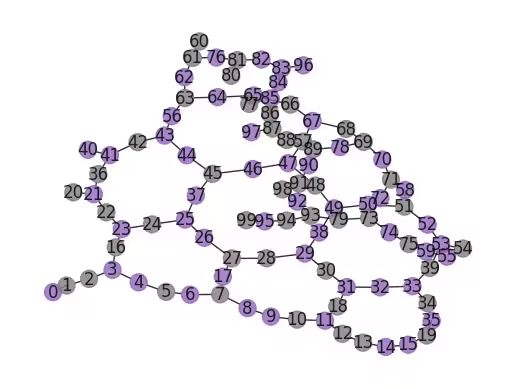
Abschließend zeichnen wir einen Graphen basierend auf dem CVaR-Ergebnis. Wir teilen die Knoten des Graphen in zwei Mengen auf, basierend auf dem CVaR-Ergebnis. Die Knoten der ersten Menge werden grau eingefärbt, die der zweiten Menge lila. Die Kanten zwischen den beiden Mengen sind die Kanten, die durch die Partitionierung geschnitten werden.
def plot_result(G, x):
    colors = ["tab:grey" if i == 0 else "tab:purple" for i in x]
    pos, _default_axes = rx.spring_layout(G), plt.axes(frameon=True)
    rx.visualization.mpl_draw(
        G,
        node_color=colors,
        node_size=150,
        alpha=0.8,
        pos=pos,
        with_labels=True,
        width=1,
    )

plot_result(graph_100, to_bitstring(sorted_result_dict[0][0], 100)[::-1])
Referenzen
[1] Weidenfeller, J., Valor, L. C., Gacon, J., Tornow, C., Bello, L., Woerner, S., & Egger, D. J. (2022). Scaling of the quantum approximate optimization algorithm on superconducting qubit based hardware. Quantum, 6, 870.
[2] Matsuo, A., Yamashita, S., & Egger, D. J. (2023). A SAT approach to the initial mapping problem in SWAP gate insertion for commuting gates. IEICE Transactions on Fundamentals of Electronics, Communications and Computer Sciences, 106(11), 1424-1431.
[3] Barkoutsos, P. K., Nannicini, G., Robert, A., Tavernelli, I., & Woerner, S. (2020). Improving variational quantum optimization using CVaR. Quantum, 4, 256.
[4] Barron, S. V., Egger, D. J., Pelofske, E., Bärtschi, A., Eidenbenz, S., Lehmkuehler, M., & Woerner, S. (2023). Provable bounds for noise-free expectation values computed from noisy samples. arXiv preprint arXiv:2312.00733.
Tutorial-Umfrage
Nimm dir bitte eine Minute Zeit, um Feedback zu diesem Tutorial zu geben. Deine Einblicke helfen uns, unsere Inhalte und das Nutzererlebnis zu verbessern.